
海外のうなぎ切手とFDC
アフリカ
ジンバブエ
「ジンバブエの魚」第2シリーズ 初日カバー
1994年1月20日発行
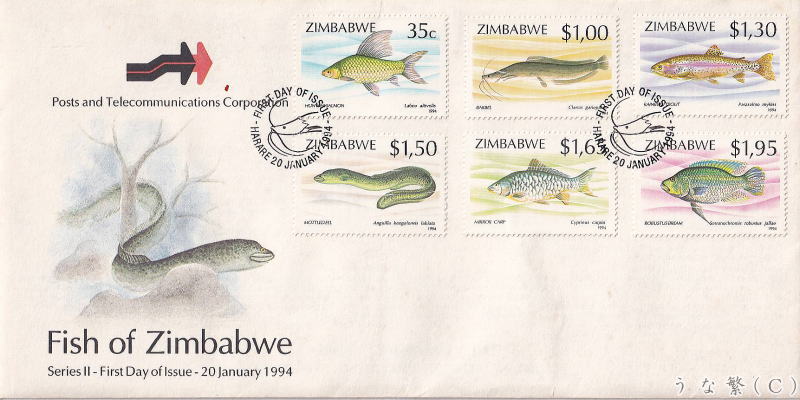
封筒には、魚を描いた6種類の切手が貼られ、発行日の消印 「20 January 1994」 が押されています
封筒左側の魚のイラストと “Fish of Zimbabwe” の文字は、この切手シリーズに合わせた図案です
6種類の額面は 35セント、1.00ドル、1.30ドル、1.50ドル、1.65ドル、1.95ドル です
ジンバブエの河川・湖沼に生息する淡水魚6種【フニャニサーモン、アフリカナマズ、ニジマス、
アフリカマダラウナギ、ミラーカープ、ロブスタスブリーム】を描いた切手シリーズです
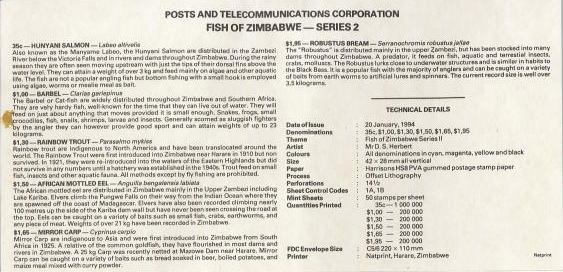
POSTS AND TELECOMMUNICATIONS CORPORATION FISH OF ZIMBABWE — SERIES 2 35c — HUNYANI SALMON — Labeo altivelis Also known as the Manyame Labeo, the Hunyani Salmon are distributed in the Zambezi River below the Victoria Falls and in rivers and dams throughout Zimbabwe. During the rainy season they are often seen moving upstream with just the tips of their dorsal fins above the water level. They can attain a weight of over 3 kg and feed mainly on algae and other aquatic life. The fish are not a popular angling fish but bottom fishing with a small hook is employed using algae, worms or meali[e] meal as bait. $1,00 — BARBEL — Clarias gariepinus The Barbel or Cat-fish are widely distributed throughout Zimbabwe and Southern Africa. They are very hardy fish, well-known for the time that they can live out of water. They will feed on just about anything that moves provided it is small enough. Snakes, frogs, small crocodiles, fish, snails, shrimps, larvae and insects. Generally scorned as sluggish fish by the angler they can however provide good sport and can attain weights of up to 23 kilograms. $1,30 — RAINBOW TROUT — Parasalmo mykiss Rainbow trout are indigenous to North America and have been translocated around the world. The Rainbow Trout were first introduced into Zimbabwe at Henerne in 1910 but not survived. In 1921, they were re-introduced into the waters of the Eastern Highlands but did not survive in many years until a hatchery was established in the 1940s. Trout feed on small fish, insects and other aquatic fauna. All methods except by fly fishing are prohibited. $1,50 — AFRICAN MOTTLED EEL — Anguilla bengalensis labiata The African mottled eel are distributed in Zimbabwe mainly in the Upper Zambezi including Lake Kariba. Elvers climb the Pungwe Falls on their way from the Indian Ocean where they are spawned off the coast of Madagascar. Elvers have also been recorded climbing nearly 100 metres up the side of Kariba dam wall but have never been seen crossing the road at the top. Eels can be caught on a variety of baits such as small fish, crabs, earthworms, and any piece of meat. Weights of over 21 kg have been recorded in Zimbabwe. $1,65 — MIRROR CARP — Cyprinus carpio Mirror Carp are indigenous to Asia and were first introduced into Zimbabwe from South Africa in 1925. A relative of the common goldfish, they have flourished in most dams and rivers in Zimbabwe. A 25 kg Carp was recently netted at Mazowe Dam near Harare. Mirror Carp can be caught on a variety of baits such as bread soaked in beer, boiled potatoes, and maize meal mixed with curry powder. $1,95 — ROBUSTUS BREAM — Serranochromis robustus jallae The “Robustus” is distributed mainly in the upper Zambezi, but has been stocked into many dams throughout Zimbabwe. A predator, it feeds on fish, aquatic and terrestrial insects, crabs, molluscs. The Robustus lurks close to underwater structures and is similar in habits to the Black Bass. It is a popular fish with the majority of anglers and can be caught on a variety of baits from worms to artificial lures and spinners. The current record size is well over 3.5 kilograms.
TECHNICAL DETAILS Date of Issue : 20 January, 1994 Denominations : 35c, $1,00, $1,30, $1,50, $1,65, $1,95 Theme : Fish of Zimbabwe Series 2 Artist : Mr D. S. Herbert Colours : All denominations in cyan, magenta, yellow and black Size : 42 x 28 mm all vertical Paper : Harrisons HS8 PVA gummed postage stamp paper Process : Offset Lithography Perforations : 14½ Sheet Control Codes : 1A, 1B Mint Sheets : 50 stamps per sheet Quantities Printed : 35c — 1 000 000 $1,00 — 200 000 $1,30 — 200 000 $1,50 — 200 000 $1,65 — 200 000 $1,95 — 200 000 FDC Envelope Size : C5/220 x 110 mm Printer : Natprint, Harare, Zimbabwe Natprint
ジンバブエ郵政電気通信公社発行「ジンバブエの魚」シリーズ2 — 35セント — フニャニ・サーモン(学名:*Labeo altivelis*)。別名「マニャメ・ラベオ(Manyame Labeo)」とも呼ばれるこの魚は、ザンベジ川のビクトリアの滝より下流のほか、ジンバブエ全域の河川やダムに生息しています。雨季には、背びれの先端だけを水面から出して川を遡上する姿がよく見られます。体重は3kgを超えることもあり、主に藻類やその他の水生生物を食べて生活しています。釣り人から特に人気があるわけではありませんが、小さな針を使い、藻類、ミミズ、あるいはトウモロコシの粉(ミーリーミール)を餌にして、底釣りで狙われることがあります。1.00ドル — バーベル(ナマズの一種、学名:*Clarias gariepinus*)。ジンバブエおよび南部アフリカ全域に広く分布しています。非常に生命力が強く、水から離れても長時間生きられることで知られています。口に入る大きさであれば、動くものなら何でも食べてしまいます。ヘビ、カエル、ワニの幼体、魚、カタツムリ、エビ、幼虫、昆虫などがその例です。釣り人からは動きが鈍い魚として敬遠されがちですが、実際には釣り応えがあり、最大で23kgにまで成長します。1.30ドル — ニジマス(学名:*Parasalmo mykiss*)。北米原産ですが、現在では世界各地に移入されています。ジンバブエには1910年に初めてヘナーネ(Henerne)へ持ち込まれましたが、定着しませんでした。1921年にイースタン・ハイランド(東部高地)の河川へ再導入されましたが、1940年代に孵化場が設立されるまでは、長期間にわたって定着することはありませんでした。ニジマスは小魚や昆虫、その他の水生生物を捕食します。釣り方については、フライフィッシング以外の方法はすべて禁止されています。1.50ドル — アフリカン・モットルド・イール(ウナギの一種、学名:*Anguilla bengalensis labiata*)。ジンバブエでは、主にカリバ湖を含むザンベジ川上流域に分布しています。マダガスカル沖のインド洋で孵化した稚魚(シラスウナギ)は、プングウェの滝(Pungwe Falls)を登って遡上してきます。ウナギの稚魚(シラスウナギ)がカリバダムの壁面を100メートル近くよじ登る様子が記録されていますが、ダム頂上の道路を横断する姿は確認されていません。ウナギは、小魚、カニ、ミミズ、あるいは肉片など、さまざまな餌で釣ることができます。ジンバブエでは、21キログラムを超える個体が記録されています。1.65ドル — ミラーカープ(鏡鯉)— *Cyprinus carpio*。ミラーカープはアジア原産で、1925年に南アフリカからジンバブエに初めて持ち込まれました。キンギョの近縁種であり、ジンバブエ国内の多くのダムや河川で繁殖しています。最近では、ハラレ近郊のマゾウェ・ダムにて、網で25キログラムの個体が捕獲されました。ミラーカープは、ビールに浸したパン、茹でたジャガイモ、カレー粉を混ぜたトウモロコシ粉など、さまざまな餌で釣ることが可能です。1.95ドル — ロブスタス・ブリーム — *Serranochromis robustus jallae*。「ロブスタス」は主にザンベジ川上流に分布していますが、ジンバブエ各地のダムにも放流されています。肉食性で、魚類、水生・陸生の昆虫、カニ、軟体動物などを捕食します。水中の構造物の近くに潜む習性があり、その生態はブラックバスに似ています。多くのアングラーに人気のある魚で、ミミズから人工ルアー、スピナーまで、さまざまな餌や仕掛けで釣ることができます。現在の最大記録は3.5キログラムを大きく上回っています。
技術的詳細 発行日:1994年1月20日 額面:35セント、$1.00、$1.30、$1.50、$1.65、$1.95 テーマ:「ジンバブエの魚」シリーズ2 デザイナー:D. S. ハーバート氏 色:全額面ともシアン、マゼンタ、イエロー、ブラックの4色刷り サイズ:42 × 28 mm(縦型) 用紙:ハリソン社製HS8(PVA糊付き切手用紙) 印刷方式:オフセット・リトグラフ 目打ち:14½ シート管理コード:1A、1B 1シートあたりの枚数:50枚 発行部数:35セント — 1,000,000枚、$1.00 — 200,000枚、$1.30 — 200,000枚、$1.50 — 200,000枚、$1.65 — 200,000枚、$1.95 — 200,000枚 初日カバー(FDC)封筒サイズ:C5(220 × 110 mm) 印刷所:ナットプリント(Natprint)、ジンバブエ、ハラレ
google翻訳


掲載の写真、図表、文章などの無断転載を固くお断りいたします
copyright©2006 Unashige all rights reserved